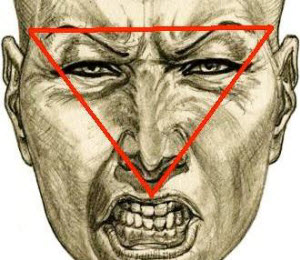
Head shots, while plausible, are not always probable during moving, dynamic engagements.
www.personaldefensenetwork.comImmediately post-incident, six concerns need to be addressed:
Is the aggressor down and alone?
Threats are stopped via three primary methods:
Immediate incapacitation via cranio-ocular cavity, low brain engagement. Like hitting a light switch, the lights are out. This method requires fundamental marksmanship skill, a plausible method but not probable when dealing with moving, dynamic aggressors. If utilized, keep eyes on downed aggressor from distance and verify no further movement once stopped.
High center visible mass hits to vital organs (thoracic cavity). This method, while effective, may take time (as blood pressure drops to an incapacitating level), during which your opponent can remain active. Maintain attention on the immediate threat until stopped, down and unmoving. If the assailant is still active, verbal commands are required.
Psychological defeat: they give up. This is the least reliable method. Some people don’t have it in them to continue to fight once hurt. However, this doesn’t mean they won’t become an active aggressor at any moment. Strong verbal commands, proper dominant positioning (see below) and attention are required. Don’t become complacent and believe you have “won” until the individual in question is being driven away in the back of a police vehicle.
Lastly, don’t forget the rest of your after-action assessment for the sake of this first step. Once you have verified the threat is down and out, immediately begin the remainder of your assessment process.
Are there any other threats?During sudden reactive encounters, a body alarm reaction sometimes referred to as adrenaline stress or the fight-or-flight response will occur. Increased heart rate, auditory exclusion and tunnel vision are a few of the effects of this natural response to danger. Here I am going to focus on tunnel vision (the loss of peripheral vision with retention of central vision), which results in a constricted circular tunnel-like field of vision. Individuals interviewed after a critical incident often make comments like, “All I saw was the knife/gun in his hand.”
It is also common for practiced criminals to operate in numbers, stacking the odds in their favor and against us. Because of tunnel vision and the likelihood of multiple attackers, it is imperative that you initiate a full scan of the threat environment post-engagement in an effort to break tunnel vision quickly and pick up any and all additional threats present. This process doesn’t have to be complex or choreographed. However, it is important to note that we live, work and operate on horizontal and vertical planes (stairwells, hills, second floors, balconies, basements, lower floors, etc). Whatever scanning processes you utilize, remember to check 400 degrees around you: 360 degrees of your horizontal environment and then at least 20 degrees up and 20 degrees down.
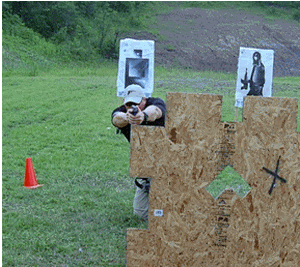
Should you move? If behind decent cover, it may not be the best choice. Randomize training to avoid a conditioned response.
www.personaldefensenetwork.comOn open ground, like a square range, movement is practical and advisable. The circumstances and environment you find yourself in during and after a critical incident may or may not resemble that open environment. If you have achieved a covered or concealed position before, during or after gun fire occurs, an assessment of that position is essential once the threat has been stopped. Should you move from your current position? Cover can be compromised, especially if there is more than one opponent, and there may be better, more secure choices. Lastly, you should move to change the position you were last seen in by your adversary.
One note of caution: if you condition yourself to move (e.g., lateral side steps) with each string of fire, you will move during a real incident. Randomize your movement patterns during training. Luck may find you behind decent cover, and conditioned movement may take you away from it.
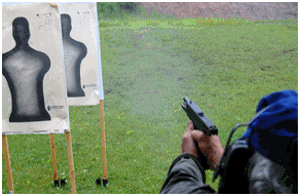
Check your firearm. It may not be ready if other threats suddenly present themselves.
www.personaldefensenetwork.comChances are you have no idea how many shots were fired during the fear, stress and confusion of a live incident. Criminals often travel in packs, so it’s critical that you check the status of your firearm. This can entail a quick visual and tactile check or a full tactical reload, emergency reload or some type of stoppage/malfunction remediation. It is not uncommon in training during live-fire stress drills for students to be standing idle post-shooting with an empty firearm. Ingrain this important check into your after-action assessment process.
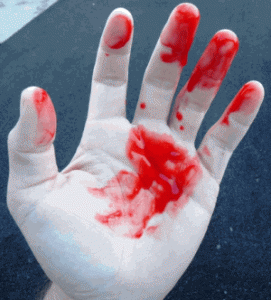
Check yourself. You may be injured but not know it due to the effects of extreme stress.
www.personaldefensenetwork.comCriminals, terrorists and enemy combatants target us in the same places we target them, so you need to do a physical self-assessment. Due to the body’s adrenaline response, you may not immediately feel it if you have been hit or injured. Simply looking yourself over will not suffice because, depending on the lighting or color of your clothing, you may not be able to see and properly identify blood. Couple this with the other stresses involved and it is possible to just miss it.
With the firearm in a ready position, take the support hand off the gun and conduct a quick brush check of center mass sternum and upper chest with the palm of your hand. Keep your head and eyes up on the environment and rub your fingers together (in case it’s pitch black). Do you feel a slick wetness on your fingers? If enough light is available, bring the palm of your hand up in front of your face momentarily to get a visual. Do you see a glistening wetness? If light is low (criminals prefer to operate at night), you won’t be able to readily identify colors. Your eyes will operate in shades of black, white and gray.
Am I prepared to communicate?Do you need to verbally communicate with others in the immediate environment such as family or bystanders? Is the action really over? Are you safe enough to warrant putting the firearm away or down and taking out a cell phone? Take a few deep breaths and then contact authorities. Give them your location twice, what you are wearing so responders can identify you, then say your name and await instructions.
Conclusion
The concepts outlined in this assessment are simple, effective, and can be executed under any conditions. Utilize this template as a litmus test of your current assessment process or to develop your own after-action process. These questions/concerns/steps need to be practiced in order to be available under stress. Train all or parts of this assessment after each personal protection oriented shooting drill. There is more to be concerned with after a critical incident than just “checking six.” Consider these steps carefully and remember that knowing does not equate to doing. Shoot and then check left, right, up, down, and to the rear. Consider moving, check your gun, check yourself, and communicate!
Share tips, start a discussion or ask other students a question. If you have a question for an expert, please click here.
Already a member?
Chris, this is a very good article. I understand the flow of events, but I think you may know better than what you stated in this sentence: "Don’t become complacent and believe you have “won” until the individual in question is being driven away in the back of a police vehicle." That is really not a win nor is it the end of the post-event conflict. I am sure you are aware of the whole legal repercussions of a shooting incident.
I had the expectation of what to say, what not to say, when the police arrive, however this information is equally as valuable.
There is no such thing as common sense at the commencement a firefight.. only your training/practiced reactions!
You should talk about when incident is going on, and everything goes in slow motion (step by step) until the incident is over. Tunnel vision is so real during the incident.
Excellent article. Question, once you are satisfied there are no other assailants should you be providing first aid to the attacker after you have taken care of yourself?
When you contact authorities.... give them only pertinent info ( location, someone has been shot, etc). If you stay on the line with them they will continue to ask you questions that could be used against you in a courtroom setting.
Very informative training app s a must
First check yoyr self. Family. THen call 5-0. When the police come. Have your hands up. Your gun on the ground.DO NOT MOVE. When they start to ask you things. Give your name & ask for a lawyer. DO NOT! DO NOT! talk with the police until you have a lawyer with you. Just give your name & ask for a lawyer. Don't talk yourself into jail. Know your rights & use them. And be ready to get sued by the thughs family.
Get supervised training from a certified instructor. Train in low light conditions. Practice, practice, and more practice! When the SHTF, remember that you are not a LEO! Never go looking for trouble; it will come looking for you. In the Army, we used to say that the defender should pick the ground, and it must be good ground. Practice, practice, and more practice!
Practice, practice and more practice for all potential situations. Make your reactions memory reactions to similar environments and you might live through a situation.