Counter Ambush Neuroscience Session 3: The Power of Recognition
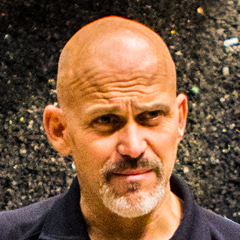
Rob PincusRecognition is the Method of the Expert. After repeated exposure to information or experiences, you can develop expertise in an area and become more proficient. Your responses and decisions become faster and more accurate. This Session explains what Recognition is, how to develop it and how it plays into your most efficient defensive responses.
When I learned about all this stuff first and I accepted it is very real. And all you have to do is watch a bunch of video cameras footage of people in real fights, and really getting caught off guard and real ambushes to know that this instinctive reactive stuff happens right. Every day we have experiences if you just think about it and look at it, of perception trumping awareness every time. Stuff your body is aware of stuff your brain becomes aware of that you can't articulate things that are perceived that you act on and take action on all day long intuitive responses. The classic book in our world is a book called gift of fear by Gavin de Becker was written 20 years ago I'm sure at least, trusting your intuition, right.
Malcolm Gladwell in popular culture wrote a book called blink about non-cognitive decision making based on work at the I believe is the Planck Institute over in Europe. Psychologist first name is GERD. Can't pronounce his last name. There's a lot of Zs' in it and a G and R but his book was called gut feelings. And it's a great book.
And it's a lot of that information was put out in a more popular way within the book blink. We know this stuff happens, but how do we get from an instinctive, ah which we can't really argue with to a I'm going to elbow you in the face even though I've never practiced throwing an elbow in this position as I was getting pushed back against the wall and it just happens. And I have no recollection of choosing to do that. And it'd be nice if I could claim it, especially if nobody was watching and there was no video camera. And I can just say I did exactly what I was trained to do.
Saw that a lot for a long time in police reports responded is trained. I was told responded as trained responded as trained. He's in cuffs, yay. You know, that was the end of my fight. Good.
Somewhere in the middle some craziness happened, but I I'll, I guess, yeah. I'll assume I responded as trained. I went to the police Academy. I did this practicing this judo move and he's in handcuffs. I must have done it today.
Then dash cameras showed up and then surveillance security cameras started becoming more common. And all of a sudden the fights we were seeing looked nothing like the training environment. And you couldn't just write in the report respond as trained anymore well but every once in a while you'd see somebody do something that clearly was trained clearly was what they had intended to do. Almost a hundred percent of the time those things would be things that we considered to work well with what the body does naturally. It was very rarely the complex mechanical, you know put your foot here, stand with this foot, turned out way this foot five degree, your hand five, 16 inches above your head and do like that stuff doesn't happen.
You don't see that on videos of real fights, right. You see them, you see applications of concepts in real fights. You see people taking the mechanical skillsets that may only work in isolation and adapting them so that they work well with the way the body actually moves in a fight, right. If you see they'll be shooting standing up perfectly straight at the target range they may be able to hit the target every single time. That's awesome.
Except people don't stand up straight in fights. So they have to take and improvise a way to shoot in a lowered center of gravity position where they actually are when they're shooting, in the fight. When you're shooting in the fight you're not standing up straight, not in an ambush not in a dynamic critical incident, chaotic, surprising threatening, dynamic moment. So you have to improvise well, we started seeing that stuff. And so the question, the frustrating thing for me became wait a minute, how do we bridge this?
How do we get people to the point where they're clearly not doing the trained thing technically the way they were trained to do it but they are applying the concepts? And then even more importantly, let's say that we find good intuitive things that we want people to do that they actually can do exactly the same way in a fight as they did when they trained, how do we bridge that gap? How do we make that and at the time instinctive? We want that to be automatic. Well again, we don't want some of this stuff to be automatic.
There has to be a, some level of decision-making whether it's cognitive or non-cognitive am I aware of it? And can I articulate the decision making process or does it just happen based on good solid training and learned stimuli, eliciting, a learned response and a guy named David Geary wrote a book called Origin of Mind. And in this book, origin of mind he had a chart and the chart made it all make sense. And it was a pretty simple chart and it was kind of like a lot, and urgency and exposures. Well, the higher the I'm going to do this a different way, do it this way.
The higher the urgency, the lower the number of exposures that was necessary for someone to learn to do something intuitively. That makes sense. So if I get burned by the stove I don't need to keep doing that to realize it's a bad idea to touch the stove without making sure it's turned off. Very few exposures because there's a very high urgency. If something isn't that urgently dangerous smoking, smoking isn't that urgently dangerous.
If you have really bad asthma and you take the first puff of a cigarette and you end up in the hospital, oops for you, it was urgent. You're going to stop smoking right away. But if you have healthy lungs it may take you 20 or 30 years of exposure to smoking. You realize you probably shouldn't be doing that anymore. Right.
Then it clicked. The brain has this ability to adapt and learn at some incredibly high levels. And a lot of this happens in this limbic region, the cingulate gyrus this ability to learn certain stimuli require a certain response because of this urgency, because of this imperative thing that's going on or through a repeated number of exposures to learn that a certain stimuli needs to elicit a certain response. How many of you are capable of stopping your car without looking under the dash for the brake pedal? Probably all of you, right.
How many of you have taught a 12 or 13 or 14 year old how to drive ? And seen them look under the dash for the brakes pedal, right. Some exposures, some tying together of the stimulus of you have to stop the car to the learning of what that how the foot moves from the gas pedal area to the brake pedal area creates the ability to intuitively move the foot to the brake where your brain knows where it is, but you can't articulate I'm going to move my foot six inches to the left and two inches up. And you don't need to, because you have you've developed an intuitive ability to hit the brake. Who drives stick or has driven a stick, right?
You intuitively you don't look down at the post. Three is back. Yeah. Like that doesn't after the first week, right. It happens after the first week, when you go to England and you find yourself going into a circle and needing to stop and you open the door instead of reaching for the gearshift which is now over here, that doesn't work.
There's no gear shift thing over here. When your foot is still doing, it's it's bad. But when you learn to group that stuff together, you learn to drive stick. You intuitively, as you come up to the stop sign your hand comes off the steering wheel. It reaches over to put the car in neutral and your foot goes over to the clutch.
Your other foot goes to the brake. You don't have to think about it. You don't have to be aware, right. You change cars dramatically. Different kinds of clutch, go from a truck to a sports car.
Now you have to relearn. You have to change that process, right. And the worst is when you then go from the car that has a manual transmission to the car that has an automatic. And it's not a big deal when you're in control when everything's fine. But the first time that you have to kind of panic stop or you get caught off guard, the light changes the guy runs the red light the kid comes out into the road, whatever.
And your left foot hits the edge of the brake looking for the clutch that isn't there. And the car comes to a screeching halt when it probably didn't need to, cause you clip the edge of the rig or you dislocate your knee cause you're looking for the clutch it isn't there. And you're aren't, your leg just goes completely straight or you put your hand in and through the styrofoam cup of coffee. That is where the gear shift used to be. Right.
Cause you're reaching for it there. That's why you need to be there. But because it's so close, it's so close to the environment. The context is the same. And this is where we start really getting deep into the training model.
Context. Context is King. If you train with a gun all day long on your hip, then you carry the gun in your cargo pocket when you're actually out in the real world, what happens? That's what you just did. You just told yourself when you need a gun, you do this.
And then you have to remember to do this. That's different. That's very close. If it's completely different, it doesn't matter, right. You don't.
When you're walking down the street and a kid runs out in front of you if you drive a manual transmission you don't stick your foot out looking for a clutch, cause you're walking you're not driving. But if you drive a manual transmission for 20 years at the second day you're in an automatic transmission and the kid jumps out in the road, your legs gonna fly for that clutch because you've conditioned yourself. You've learned that. And that all happens here. There's no analysis.
There's no cognitive decision-making, there's no part of your brain that says reach for the clutch, and then your brain reminds itself, "Oh there's no clutch in this car don't worry about it." That's long past. That short path and the medium path, that exists in the limbic system be the cognitive analytical processing every single time. Literally not just figuratively, literally a faster decision-making process, a faster way to execute physical skills. Instinctive, intuitive and then the analytical decision-making. Instinctive and intuitive short path versus long path all happening here in the limbic system.
I've lost my eraser The idea is to create a stimulus response pattern right. If we take a natural stimulus, like somebody rushing towards you or a loud noise, those natural stimuli illicit natural reactions, right. So a loud noise we bring our hands up, we focus on the source of the noise. A mosquito bite we bring our hand to hit that tactile stimulus. Rapid motion, our eyes focus on it.
Close proximity we lower our center of gravity. Our hands come up and we focus on it. Natural stimulus, natural reactions. That's the instinctive part. Learned stimulus creates a learned response, right.
Playing music, right. Play an instrument. You learn the stimulus of reading the notes on the page. You have a learned response, how your fingers move how you hit the keys, how your fingers move on the strings. Learned stimulus, learned response.
Any whatever your job is your job probably involves learn stimuli learned responses. And these can be very intuitive and very fast, right. If you're a computer programmer and you know a computer programming language, and I say to you how do you make, you know the computer make a beep with your computer language? Well, then you probably know there's probably some code that does that. If you're into graphics you probably know the code for a certain color, you know the code range for certain colors.
If it's a color that you just designed a website for me. And I say, what's the code for that color? Because I have another website guy who wants to know to match a banner to it. You're gonna be able to tell me you're gonna know that stuff. The rest of us don't know that stuff at all.
We can go look it up. We could go learn it, but it's not intuitive. It's not learned stimulus response pattern unless we studied it, right. This is the process of developing expertise. That's what expertise is.
Expertise is a stimulus response pattern. We have a theory called the warrior expert theory through frequent and realistic training, you can learn to use the power of recognition to respond more efficiently and appropriately during your dynamic critical incident during your fight. Well, that's what this is. Learn stimulus learned response, natural stimulus, natural reactions. You'll hear people talk about conditioning.
The process of conditioning. It's used both casually and then there's a technical psychological terminology also with conditioning. What some people want to do with conditioning is take a natural stimulus and have it create a learned response, right. Natural stimulus learned response. That's not really how it works.
We can't say that the next time you get stung by a mosquito I want you to not move your hand towards it, Instead I want you to whistle. And not expect that you're gonna flinch when that mosquito bites you and that hand is going to move. Now you can acclimate, especially if you have a high level of anticipation. If we put you in a mosquito cage and say, okay, you're going in there. And if you move your hand we're not giving you a million dollars.
But if your hands just, if your hand stays below your waist and you whistle, when that Ms. First mosquito stings you we're going to give you a million dollars. You could probably keep that hand down. Right. But I don't think that hands not gonna move.
And if we don't tell you about the million dollars and we don't give you the awareness about the million dollars, and we just say, "Hey go stand in that glass box for a second." And you get stung by a mosquito and go like that. We pull you out, go sorry you don't get the million dollars. You're gonna be mad. Cause we didn't make you aware. You had no awareness that you needed to do that, right.
So in a controlled environment, we can really downplay or maybe get rid of natural reactions especially when you have a warning, right. Who's ever gone to the range and not shot somebody that was shooting a gun in your presence? Hopefully all of you they've been to a range. Or maybe I understand why you only went once. So the, like but if you go to the mall and somebody pulls out a gun and shoots in the same way they did in the lane next to you at the range you might be compelled to pull your gun out and shoot them, right.
So context kind of matters, right. When it comes to learn to responses, because the stimulus is going to be context dependent. Well, this is where conditioning actually does work. We can take through the process of conditioning, we can take a learned stimulus including the content, we can elicit natural reactions. And this goes back to that chart I was talking about earlier with the imperativeness or the urgency, right.
How do we know if someone comes in here with a gun and they aren't snarling and they aren't threatening and there isn't a loud noise. They haven't shot anybody. Somebody comes through that door stands over here observing what's going on. And I just kinda nod. So you assume it's somebody I know everything's good.
Maybe they're wearing a logo from the facility here, we're talking. And then all of a sudden you look over and realize that while I was talking, they pulled out a gun. And they're now standing here, listening to me, just kind of with their finger on the trigger, rubbing their shoulder with that gun, with the muzzle pointed in at you guys over here, though the raised eyebrows like that's the first physical indication that there is a natural reaction occurring to this learned stimulus. Nobody's born instinctively knowing that having a nine millimeter hole pointed at you from this plastic and or metal machine is dangerous. That is a learned stimulus that elicits a natural reaction.
And that's that process of learning conditioning, becoming accustomed to a non-cognitive decision making process, right. And that can happen over here too. We can learn this. This arrow is just learning. We learn to tie a stimulus to a learned response.
We can tie these two things together. We can make the learn stimulus and a natural stimulus come together through the process of conditioning to elicit a natural reaction, right. That's the classic example of Pavlov's dogs, right. Give them the food, ring the bell, give them the food, ring the bell, give them the food, ring the bell give them the food, ring the bell. Don't give them the food ring, the bell.
Do we still get salivation? Do we still get the natural reaction? Yes. Through the process of conditioning. So we can take your natural reactions and create them through learned stimuli, through this process of training right.
But what doesn't happen, we can't just get rid of this. We can't block that out and say forget about the natural reactions. And we wouldn't want to, the natural reactions are good. They're positive. They help us overwhelmingly more than they hurt us.
We can also use the process to help increase our learned response speed because we tie the response to the stimulus. We tie the response to the stimulus. If we get into a situation, If we get into a situation where when we want to train ourselves to reload our guns, again training ammunition, we're gonna stand in a room. We're gonna lock the gun open. We're gonna say go.
And we're going to drop the magazine out, rip the magazine out if we have to, insert a fresh magazine and rack. If that's the process we're going to go through, we may learn the mechanics, right. We may learn the mechanics. Wrong green gun. We get into a process of wanting to learn the reload process, simply by locking the gun open and saying go, drop the magazine, insert a fresh magazine and rack.
We are going to learn the mechanics of reloading but that's the learned response. If we don't include the learned stimulus, if we don't actually go out to a live fire range and start with a round in the chamber and an empty magazine and shoot so that we feel slide lock and let that slide lock be tied to the execution of the complex motor skill of reloading. Then we may not be able to execute this skill intuitively when we need it. So big part of the counter ambush training model is understanding the need to tie our learned response to the stimulus. Our natural reactions may become the learned stimulus, right.
How many of you have heard people who are martial artists suggest that they always go to their magic ready position, right? They always go into their boxer stands. They always go into some kind of guarded position. They always blade off law enforcement officers. You know.
Well I always, I flinched to my gun. I always move my hand to protect my gun. That's what I do. I'm not going to do this. I'm just going to do this.
Well, what we see overwhelmingly when we look at the videos is that they'll go like this and then this. So we see that natural reaction. It might only be this. And then the hand moves. If they're cognitively keeping up with it what they've done is they've turned their natural reaction into a learned stimulus to elicit the learned response.
So after years and years and years of wearing a gun and being very aware that police officers are quite often killed with their own guns relatively speaking, not often in the big picture, but often if you're going to be killed a certain significant percentage of officers who are killed are killed with their own guns. So they learn, we need to protect this gun. It becomes an imperative, urgency, few exposures protect your gun. You're told in the Academy, protect your gun, protect your gun, blade away, cover the gun. Cool.
Well, I'm going to learn when I get startled that's a natural reaction. I'm startled, learned stimulus, learned response cover the gun. So it seems to happen automatically. It seems to be a natural stimulus, eliciting a learned response, but there's really a complex process going on very subtly inside the brain. If we understand the process, we can capitalize on the process.
We can make the process part of our training model. We can learn to develop these stimulus response patterns. That's intuitive skill development, tying the stimulus of slide lock to the response of a slide lock reload. That's how we do the intuitive skill development not isolated. We want to not be isolated.
That way we are capitalizing on the power of recognition. Recognition is the method of the expert. Recognition is how the expert responds to the information being brought in by the senses. You don't have to go look up the list of symptoms and the patient history to come up with a diagnosis when you are a medical expert in the field that the patient is dealing with, right. If you're a psychologist and somebody says here's the symptoms, here's the patient history of that behavioral disorder should just show up in your head.
You should recognize it. Usually when we use recognition we're talking about like people and faces, right. I know you, right. Some of the people in this room, I recognize you because you've trained with me before, right. I know this guy.
I recognize who this guy is because I know his dad and I had the information that his dad was bringing his son. So when I see the two of them together I can put those things together and recognize that he must be this guy based on prior learned information. Right. If his dad hadn't been here and just came walking up to me I may or may not have any idea is that guy is right. But because of the context I recognize what it is I need to do in response to him.
"Oh hey, how're you doing?" "I know who you are." Other people I've trained with right. I just spent four days with Greg on the range, up in St. Augustine. So I know him. I recognize him, right.
There's that same idea of, I recognize the person so I know how to respond to them, right. "Oh, that guy threatened to beat me up next time he saw me." I need respond differently than I did when I saw Greg, right. The recognition to slide lock, the recognition to I'm threatened to protect my gun, the recognition of the programming language for the computer programmer to make the computer do what it is you want it to do. That's expertise. You want to become a warrior expert.
You want to become a personal defense expert. You want to become a defensive shooting expert. You want to become an unarmed defense expert a home security expert, a defensive driving expert, an emergency medicine expert. You want to be able to act intuitively through the power of recognition without having to go through that long analytical path. Like if I get shot, I don't want you to have to Google gunshot wound care and hope we have good wifi.
Like I want you to have that information in your head, I want you to recognize it. I want you to say, "Oh, I know what to do." Right. "I know how to fix that." And if I need to, I pull my gun out and shoot someone. I don't want to. Let's see, step one, lower my center of gravity.
No, like that already happened. I need to recognize that this is going to happen. And there's a guy over there. I wasn't expecting it. It's surprising.
I don't know what's going to happen next, it's chaotic. He is threatening me and I recognize it, I need to get my gun out. And then it just happens. And it happens in the same way that my left foot goes to the clutch. And my right hand goes to the gearshift.
When I have to stop. When the kid runs out in the road or the deer runs out or when I was looking at the radio settings and I realized the guy in front of me was coming to a stop. I don't have to think, oh, reach for the gear shift hit the clutch that just happens. My brain recognizes what to do in the car comes to a stop. And it's not a miracle.
It's learning. It's training. It's counter ambush training for driving a car. Your self defense training needs to be counter ambush training.

Share tips, start a discussion or ask other students a question. If you have a question for an expert, please click here.
Already a member? Sign in
No Responses to “Counter Ambush Neuroscience Session 3: The Power of Recognition”