Figure-8 Drill
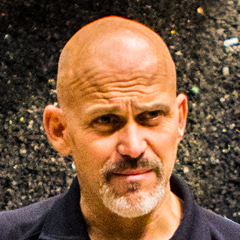
Rob PincusRob Pincus demonstrates how to use a Figure-8 drill to practice shooting in a 360-degree environment without leaving a square range with a safe designated shooting area. A Personal Defense Network (PDN) original video.
Here's another important video from the Personal Defense Network. This drill will allow you to actually practice shooting in a 360 degree environment while not leaving a square range with one safe designated shooting area. Johnny is going to help me demonstrate by moving in a Figure-8 around these barrels. Now you don't need barrels. You can put two scuffs on the ground, throw two empty boxes, ammunition, sticks, whatever you might need to do.
But here, inside this square range, we're going to use these barrels. As Johnny moves around, I as his instructor or training partner will call a target. As he reaches this barrel, if I were to call seven, at this point the target's actually behind him. He needs to turn around. He would draw, extend the weapon, and then if we were live at this point, he would engage a target.
Return to your holster, Johnny. Continue your Figure-8. At this point, as he moves forward through and comes across the middle, four. Now he has a target to his left that he needs to turn and engage and extend straight out, moving laterally the whole time, relative to the target as he extends. Return to the holster.
And again, continue the Figure-8. Now while you can do this with one target, you can see we've put up multiple targets that the shooter will still need to constantly assess and figure out where he is relative to the threat that you've identified. You can also do things like use colors, position, left, right, and center, or other designations to call the targets out for your training partner. Also during the drill, I recommend doing things like this, eight. Causing the student to turn and assess his shooting area and try to see if there is a target or not.
So by doing this, you constantly work shoot, no shoot situations. A one loud call won't instantly mean drawing the gun. This also tends to keep everyone a little safer because we're not going to be drawing and then turning, which might cause us in certain positions in the Figure-8 to draw towards our unsafe area and swing around to the targets. It's vitally important as part of any fundamental shooting in a realistic situation training doctrine that you have recognition of the target as the very first step before you draw again. So again, four.
As Johnny recognizes the target, he then draws his gun and presents towards it. He would not draw the gun and swing around looking for a four. Okay? It's not a habit we want to get into when we're carrying a gun in the real world, which of course is the ultimate realistic environment. Four.
Two. Two. Four. Nine. Headshot.
Holster. Another one of our principles is that the longer the duration of a critical incident, the more likely the need for precision. As you can see, what happened here was two shots were fired. One significantly combat accurate, one off to the left of the critical area of the target we wanted to get. Mike encountered a slide, stop, reload.
He moved into a position behind this cover, finished his reload and what I did to simulate that need for precision that tends to happen as a duration of a critical incident extends was called a headshot. He then took more time, balanced his speed and precision, and made a perfect headshot into the triangle on that target. Good job. Figure-8. Nine.
Six. Seven. So getting the Figure-8 drill is a great way to be able to practice shooting in realistic environment when you only have a 90 degree flat range to practice on. Check out more videos just like this one at the Personal Defense Network.
Share tips, start a discussion or ask other students a question. If you have a question for an expert, please click here.
Already a member? Sign in
No Responses to “Figure-8 Drill”