Holster Carry Positions: Angle & Placement
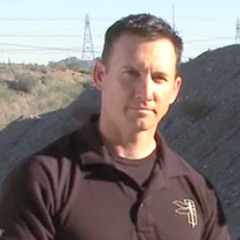
Travis HaleyTravis Haley of Haley Strategic Partners analyzes the biomechanics of holster carry positions. How are your hands, arms and the rest of your body affected by placing the holster in the right or wrong place? When drawing a handgun, straight lines are strong and angles are weak. See how small adjustments to your holster carry positions create a smoother draw.
Something to take consideration when you are either purchasing a holster or a placement, depending on the lifestyle that you carry the gun in, or maybe you change your carry style on a daily basis or weekly basis, is something that we don't generally think about. It's something that I've seen as become a big problem with technology out there, or the plethora of different holster options that we have on the market to choose from. And one of the biggest things that we don't think about that I'm seeing is this problem is something simple, biomechanics. So when you carry your gun, or where you put your holster on your body, think about how your arms, your hands, the rest of your body is going to be affected by just placing that holster in either the right place or the wrong place. So what the point of this video is is biomechanical efficiency.
That's what I want you to think about. Now, let's take, for example, the classic three o'clock carry, okay? If you're right-handed, for example, in this case for me. Now, I'm carrying at five o'clock right now, but if we look at the three o'clock carry, you'll see a lot of people that are buying these holsters that have a forward cant to it, or what we used to consider the FBI cant back in the day. Well, that holster is specifically designed for five o'clock carry, or small of the back carry, because of the angles.
And one thing I want you to remember, and what I'll demonstrate here in a second is, straight lines are typically strong and angles are weak, okay? So when we grab a gun, straight lines are strong and angles are weak. So if I carry a gun on my three o'clock and I had it kinked forward, okay, what happens is, when my hand goes down to the gun, I'm creating an angle and I'm also creating the possibility of the hand not landing consistently on the gun every time I go for it, because the angles of the wrist bones have to change. So what we need to think about is, maybe straightening that holster out, or maybe you don't want to buy another holster. Try pushing it back, maybe an inch or two off the seam line of your pants, pushing it back towards where that cant, that holster is designed to be, and then you'll start to see an actual smoother draw, and you'll see a smoother holstering, which is also a problem, when people grab a gun really quickly and they employ it and they try to put it away and they hunt for their holster, because they can't see it.
In this case, I'm running an inside the waistband holster. It's hard to find, but if I had the proper angle on it and the straight lines of the wrist and the hand and the gun, along with the straight line of the holster, they match up perfectly. But again, if I have an angle where this gun is now straight up and down, it's not gonna go in very natural for me. So again, go with the cant that that holster is designed, and you have to place that holster in a specific area, okay? So if I see a holster at the three o'clock and it's canted forward, it's not meant to be there, and you're gonna have problems.
So if you want to get faster, think about what I consider the law of just a little bit. It's just a little change that you might have to make. In this case, it's a simple angle, and that simple angle is huge in biomechanical efficiency. So think about that out on the range, if you want to be efficient or inefficient with your draw.

Share tips, start a discussion or ask other students a question. If you have a question for an expert, please click here.
Already a member? Sign in
No Responses to “Holster Carry Positions: Angle & Placement”