Session 1: Class Introduction
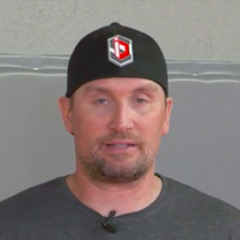
Todd FosseyThis class addresses one of the most common and dangerous attacks in the U.S.A. Your Instructor Todd Fossey will share his years of experience and expertise to introduce Defensive Skills to Counter an Impact Weapon in a wide variety of looks, angles, energies and distances.
Hey guys, what's going on? Todd Fossey here from Integrative Defense Strategies. In this class we're going to be covering a very important topic. We're going to be covering impact weapon defenses in a wide variety of looks, angles, energies, scenarios. We're going to be covering a lot of different stuff.
Why is this important? Wow. I mean, impact weapons are used all the time. You know, they're one of the most common forms of homicide in the United States. Let's do just a quick little breakdown for the, how the hierarchy looks by the way, when it comes to aggravated assaults, what are the most common methods of homicide in the United States?
One, the most common form of homicide of the United States are people who are being beaten to death. So it's a really important reason that we know how to manage ourselves within that range. Even if someone doesn't have a weapon, that could be a lethal encounter, and it's all gonna come down to what the disparity in force is. Next is going to be the use of an impact weapon. Why?
They're so common. And it also offers criminals, it offers them an excuse. It offers them a kind of reasonable form of deniability in terms of why they have this in their hands because they're so common. Most commonly is going to be a hammer. It doesn't require any permits.
It doesn't require any real level of skill or training. Obviously, like I said, they're easily accessible. So that's going to be something for you to keep an eye on out there when you're, you know, maintaining a certain level of situational awareness with that plausible deniability, right? And they might have the excuse that, "I was just trying to break into my car because my keys were locked in or I was working on a job or a chore, I just happened to have this handy on me." And also it doesn't get people's attention really, really quickly like something else would. "Oh, just a guy who has a hammer.
He must have a reason for it." Baseball bats are another one, different types of pipes or crowbars. Things of this nature are really, really common. And knowing how to handle that situation with a level of proficiency and competence, this is going to be critical. After that is going to be edged weapons, right? Edged weapons are used all the time.
Interestingly enough, 70% of people survive edged weapon attacks, right? 90% of people survive attacks with a firearm shooting. So higher probability of death if someone is attacking you with a knife. Interesting thing about that is you're kind of dealing with a whole different kind, a higher level on the sociopathic continuum, psychopathic continuum, where you're dealing with a person who's higher on that continuum. A person who's willing to get up close and personal, is willing to attack you with a knife, you know, flesh, bone, tendon, blood, guts, things of that nature.
You're dealing with with a whole nother kind of animal there. Same with an impact weapon. Person who's willing to get that close to do that kind of damage, you're going to really have to shift your mindset very, very quickly to do something that's almost unthinkable in most cases. After that it's going to be firearms, right? So that's, it's interesting because we don't see people trying to regulate impact weapons, right?
We don't see people trying to regulate hammers or baseball bats or lead pipes. We don't see people trying to regulate edged weapons, right? Or knives. Not yet anyway. They are in Europe.
Okay. So that's where that slippery slope starts. But the big picture is it's important that we're knowing how to deal with those different types of situations. One of the main things that we're going to be talking about is make sure that we're knowing what to do and have a repertoire for how to manage distance. Managing distance is going to be important.
So we'll be talking about managing distance today. We'll be talking about getting to a dominant position. Getting to a dominant position is absolutely critical. We'll be talking about different ways to counterattack. We don't recommend simply counter-defending.
We recommend that we also need to incorporate some type of a counterattack so we can soften them up, we can disrupt their nervous system. We can start to dominate that situation psychologically. That's very important, right? They have the jump on us, we've had to react. So our reactionary gap will take us some time but now we need to train ourselves in a way that we're having a reflex to make sure that we are sending a message non-verbally, maybe verbally to that person too, that, "No, now we're in charge.
You messed with the wrong person. I'm starting to dominate you. I'm going to force you to submit mentally, emotionally, and physically as well." Then the last principle that we'll be talking about are different ways that we can get that person on the ground, that's important. We use dumps, trips, and sweeps. We don't use takedowns for self-defense at IDS.
We use dumps, trips, and sweeps. Why is that important? In the classic take-down you're going to the ground with them. We don't want to go to the ground with them. All right?
We want to stay standing. We want to get them to the ground. We want to have the high ground. We want to have them on a low ground. So that way we have the opportunity, if necessary, to continue to counterattack, we have additional mobility in that way, right?
56.6% chance of there being more than one attacker. So that's an opportunity for you to break your lock, break your tunnel vision, search and assess, quickly search and assess to find out if there's another attacker, that gives you an opportunity to possibly escape if you can do so safely and reasonably, right? And it also may provide an opportunity for your loved ones to escape, for you to render emergency first aid or possibly go to some type of a force multiplier. Obviously, a lot of the people who are fans of PDN are probably going to be carrying a firearm. So knowing how to transition to higher force is absolutely critical in a wide variety of looks, feels, circumstances.
If you're not training in this particular way there's a good chance that you'll forget that you have your firearm altogether. We'll be working on some bonus material for you for armed considerations. So that's going to be really important for you guys to know, to learn. But having a cognitive understanding for how to do that is not enough. It's important that you're training these things, right?
That's why we're doing this in a class. Find a partner, someone that you can actually train these things into your nervous system, burn it into your cerebellum so when your brain downshifts when you're under stress, when you go into a sympathetic or fight-or-flight response, this will be burned in. So it can become more of a reflex so it can happen on the more autonomic level for you. If it isn't there, if it isn't burned in, there's a much lower probability of that coming out when you need it the most. We're talking about life and death here.
We're talking about making life and death decisions in micro-moments under extreme stress when someone is trying to kill you. If you overreact, you might go to prison for a long time. If you're underreact, you can be seriously injured or end up dead. And that just sends ripple effects all throughout the world. People that love you the most and on and on and on it goes.
So we find it to be very important and prudent for all citizen defenders to have a wide variety of skills and have, really take a holistic integrated approach toward that training. So that's what we're going to be focusing on today. So little intro for you guys. So you guys know what we're going to be getting into. Enough of that.
Let's start training and let's get into it.

Share tips, start a discussion or ask other students a question. If you have a question for an expert, please click here.
Already a member? Sign in
No Responses to “Session 1: Class Introduction”