Session 3: Dumps, Trips and Sweeps
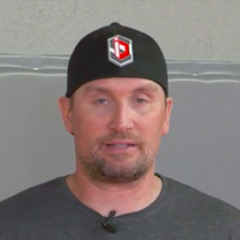
Todd FosseyOnce you’ve established the fundamentals of managing distance, counter attacking and getting to a dominant position, you’ll take a look at putting your attacker on the ground in a variety of ways – all of which allow you to remain standing through a variety dumps, trips and sweeps. Fossey illustrates a default position that offers a wide array of options in safely taking your attacker to the ground.
All right. So let's talk about some dumps, trips and sweeps. The first one we're going to do we call the Beef Wellington Dump. Okay. Everything else that we've learned up into this point we're going to for now to keep it simple.
We're going to use a 45 degree angle. Okay. One handed 45 degree angle just to illustrate the point of this particular dump. Okay. So I've crashed inside.
I've hit my Underhook. I've started my whole process of breaking down his base with my counter strikes. Notice the position that I have him in. Started breaking down his base. Remember I'm grasping his shoulder pulling in, creating a really nice frame here.
Now keep this very simple. I simply clap my hands together. Notice I clap my hands together and I grip. See this clap and grip. If you really want to get fancy with it you can clap and grip and you can tie in your thumb and your pinky finger together to make it even stronger.
That's up to you. Personal preference, Clap and grip notice. Now I'm pulling him into me. That creates a lot of pressure on his shoulder. He didn't like that.
You can do some damage to the shoulder there as well as I start to break down his base even more. Notice now, I'm just continuing to throw these counter attacks. Okay? Probably with my knee. I can throw some small counter attacks with this elbow but the important thing is that I'm breaking down his base.
By pulling him into me. We call it Shrink Wrapping am bringing my elbows into my body. As I throw my attacks the highest probability energy-wise is that he's going to push into me. I'll let his shoulder relax for a second. That he's going to push into me.
Right now what's important for you to understand is you're going to start to feel are they pushing into me? Are they pulling away? Right. We're going to make our decisions based on what energies are coming our way. We're using the principles of wrestling now.
Okay. Wrestling and grappling for these dumps and judo, judo too, for these dumps. Okay, so highest probability, he's going to be pushing into me under stress. When he's amplified with adrenaline, that's good believe it or not. The more energy he pushes into me the easier it's going to be for me to dump him.
Because I'm going to use his energy against him. Think about it like a mathematical equation again. Okay. Even if I'm small, if Shrek here Larry is pushing into me on a scale of zero to 10 with an eight amount of energy, but I'm small. And I have a two amount of energy to pull as he pushes.
Now my total energy is going to be a 10. So instead of me resisting, as he's pushing on me I'm pushing on him, which is what a lot of people will do. Who are untrained, untrained people will just push back. Now, all I'm doing is using energy up and I'm not effective with my fighting at all. So I'm feeling it.
So as I crash inside boom will turn, As I crash inside, Boom, boom. I hit this Beef Wellington position here bringing my elbows in. Okay. Continuing my counter attack here with my knees breaking down his base even more. He's probably going to push into me.
That's fine. So as he does, we're going to turn Larry so they can see this. I want to circle behind. When we hit the under hooks here we want to circle behind the underhook. This really breaks down his base, okay?
From the top crash inside, under hook breakdown base, that whole thing, clapping my hands together pulling him in continuing to counter attack. I feel him push I circle behind and I spiral him down. Break range, all the other options that we talked about before. One more time It's was called the Beef Wellington spiral Beef Wellington spiral. This is when he's pushing on me.
Remember, we're setting this up as a system. Okay. We're isolating this piece. There's a system that all interchanges with one another. It's really a non-linear algorithm.
It's a non linear learning system. Okay. Unfortunately, we can only communicate in a linear way this way. All right. So one more time slowly from the top crashing inside, coming in here, I can start with this position that we've been working under hook here.
Bang, clap my hands together. Continue to strike bang, maybe even a strike to the knee, pull him in. As he pushes into me, I circle behind him spiral him to the ground. Now I can get out escape, transition to higher force go to some type of improvised weapon. I don't know whatever choice is going to be best for me and best for the people that I love.
All right. Maybe I'm in a situation where I have loved ones with me. So I hit this position and I realize I don't want this person to hurt them. So guess what I'm doing? I'm going to keep holding on.
Follow me. I'm just going to keep wailing on him and beating him and controlling him with everything that I have until I know my loved ones and other people in the environment are safe. Makes sense. If not, if it's just me and I realize that I can probably safely get away or transition to my own force multiply whatever the case may be. Again, as I'm here, as he pushes on me, I'm spiraling behind him and taking him to the ground, watch my foot work.
Okay. I'm stepping, I'm leading with my feet and I'm stepping behind. I'm leading with my feet, I'm stepping behind. And as I do, it's a spiral motion to the ground. I lower my base as I spiral him down.
Okay. Here. Boom, boom, boom, counter attack. Step spiral to the ground. Down he goes, now I'm out.
All right. So that's the first piece of the algorithm here. When he's pushing against me, Beef Wellington, spiral to the ground from the Beef Wellington. Good, good, moving onto the next session. A couple of things I want to point out, a couple of new ounces here.
So I've just hit my High Cover Crash. I've come inside I've hit my Neck Pike. I've started my counter attack. I want to show you something how easy it is for me to transition from this Underhook and Neck Pike to the Beef Wellington position. Look at this as sort of interchangeable, really easy to do.
This is why we look at it as a system. I can still work from here. We're going to do some work from here in a minute. But right now this Beef Wellington position is a very dominant position in a situation like this. So that's what we want.
And the last piece, right? They were pushing on us. So we've stepped behind and we spiraled them down. We use their energy against them. Well, now in this piece, we feel them pull up and posture up.
See how Larry pulled up and posture up. They're trying to pull away, right? If he pulls up and he pulls away, he just breaks range for me now, what's the problem. He's got this, I'm back where I started. Okay.
So I'm still maintaining a position of control here but now he's postured up. So if he's pulling I'm pushing. Notice this position with my arm. Where his head goes his body goes. Its principle of fighting.
I want to get his head off line. If his head gets off line, he loses strength and balance and coordination in his body. And I can essentially control where his body goes by controlling his head. Core principle of fighting. Okay.
So if he's pulling, I'm pushing while I'm controlling his head, this is a great angle. Notice how my forearm goes right across his chin. By the way, I can give him some nice counter strikes there too but that's not most important for me right now. I've got powerful strikes with my knees. If I catch him there, that's just a bonus strike.
Can everyone see this? See that angle. See how this is sort of a fulcrum. This point acts as a fulcrum here and a fulcrum here. See the way I'm doing under the arm.
So I can pretty much control and move him by doing this in this way. So again, gone through the whole process. Yeah, about right there is good Larry. So I'm, counterattacking counter striking from here. I feel him posture up.
I push on his head with my arm. I stepped behind. So I'm hip to hip, creating another fulcrum here. And I simply push him over my leg. Are you ready Larry?
Simply push him over my leg. Now this is what did I still controlled this arm? So he can't just get right back up, follow. Okay. Still controlling this arm going knee on belly.
Now I can counter strike here and I can tear this thing away if I need to. Another thing, if I happened to be armed from here with my own force multiplier, as I control I can come here and like I say, drop it, drop it, drop it, drop it, drop it, drop it, drop it right as another option. Okay. I hope that you guys are starting to see how this is starting to form a system. Okay.
Called the IDS Apex Dump System. We have a whole system and a whole curriculum just around self-defense dumps trips and sweeps. Good, combination of wrestling and Brazilian jujitsu and judo. All right, so here, boom, boom, boom. Right?
Clap. He postures up step behind back trip, down he goes knee on belly, take this away. Or I can control this hand Counter-Strike or I can control this hand. Notice how I'm high with my weapon here with my handgun. Not floating or indexing because if I do, what can he do?
He can reach up and grab it. This what a lot of people will do. They'll do this, drop it, drop it, drop it. Now you can get my gun indexing from up here, drop it, drop it, Larry, drop it, drop it, drop it. Get the idea.
Okay. Sometimes I can get that Beef Wellington just isn't going to be effective. Sometimes just the body type that you're dealing with or the circumstances, are just gonna, the Beef Wellington just isn't going to be there but we're already in a great position. Again we've crashed inside Underhook, Neck Pike throw the knee. Here's a new ounce on this Neck Pike.
Instead of just putting my hand on the back or on the neck I'm reaching across, bringing my forehand across his face. Remember the importance of getting his head off line. See the way I'm creating that cross face there so I can still have a cross face even without the Beef Wellington. So we've got this really nice still very similar fulcrum going that I had with the Beef Warrington that we talked about. Small variation, but for some reason I'm trying to get this and it just isn't there.
He's strong, he's pulling his arm away. I just can't get that Beef Wellington, I'm still in a dominant position where I can really push on his head and make it very uncomfortable for him. It's called walling off the head. Really getting his head offline, breaking down his posture and his base. Beef Wellington isn't there but I'm still in a good position.
Or maybe I just don't want to compromise the good position that I'm in. Again, I'm feeling for push pull energies. Highest probability is he's going to push into me. So Larry let's just take a step that way, highest probability He's going to push into me very similar to that spiral that we did with the Beef Wellington only now we're doing it from the Underhook and the Neck Pike, makes sense. Still have the same counter attacks, bang, bang breaking down his base and his posture.
But now I feel him really pushing into me. All I do is take his head, spiral his head to the ground for this dump. Pretty easy, actually, especially if he's pushing hard the harder he pushes, the easier it is for him to dump him. Boom. He pushes here, boom, down he goes.
Okay, same options on the aftermath. My break range transitioned to a force multiplier. I might counter attacking from there. I might evade or escape. I might find an improvised weapon.
I might secure other people. I don't know. Okay. But those are the options. One more time.
The variation to this, we call tucking the head. If you remember what I did on that cross face on that backdrop I went knee on belly and I controlled his arm. There is an option that I can do that's similar to this with this spiral dump. Okay. Bang, bang, bang.
Right, now he pushes on me. Watch as his head goes down, I tuck his hand. Notice how I've got him, same position I was in before. The knee goes into his ribs. I can counter attack, take this thing away from here.
Notice as I pull away, I just pull across his fingers or as I pull up on the arm. So there's no slack in it. I can transition to a force multiplier from there as well. Okay. So again, I hope that you're seeing this as a whole.
I hope that you're seeing this as a system, right? Here's the system so far. Bang, bang, Beef Wellington. pushes on me, spiral him down. Posture's up back trip, right?
Beef Wellington's not there pushes on me, spiral him down to the ground or I can tuck his head. It's a system that we have in place. Again, fewest number of solutions to as many problems as possible, simple, gross motor effective high probability. That's the goal. Larry I'm gonna have you come on this side right now.
All of the same principles still apply. All the things that we talk about still apply up into this point. Only now I want to get him down. He doesn't want to move. He's staying locked in.
So I'm not going to go through all that. I'm just going to start here. All right. I want to start breaking him down with my knees right out, but he's just not going. I realize I have to get him on the ground.
One way that I like to do this. If he's really being stubborn here I want to get him loaded up on this foot. If I can. All of his weight on this leg, I want to get this leg really light. That's the goal.
So I just start circling him, see that see how he took that step, little snap. And as soon as when he takes that step. I know that's where his weight is. So this leg is light. So I'll just circle a little bit and I'll just start circling him.
So now that he stops, we'll change the angle. So it's a little bit better for camera. A little bit more of this way Larry. So I'm just going to snap his head and use this fulcrum system. As I'm throwing knees, I hear him stop.
So now all of his weight is on this leg. Watch what I do. I step inside here and I hip bump him. My hip bumps, his hip kicks his leg back it's like the good old disco days. It's a hip bump on the disco days.
All right. So now I'm going to come inside me gonna hip bump him. See how I kicked that leg back. That means all of his weight now is loaded on that one leg. It's a hip bump.
So I've hit my unhooking Neck Pike. I'm beating the crap out of him, but he's not going down. And I know I need to get him down. I snap him. So that leg posts.
All the weights on that leg. Step inside, hip bump here. Now watch as soon as I do that, this foot goes behind this one and I sit. Down he goes. My but just goes right to the ground.
Okay? Something I want you guys to be careful about. This is not a throw. I'm not throwing him. And when my but goes straight down.
Remember that base that posture I talked about in the beginning I need to just go straight to the ground. Otherwise if I go with him, all he has to do is hold on and I'm going to go with him on the ground. And I don't want that. Okay. Boom, boom, boom, static load up that leg.
Step inside. Boom, step behind now watch, sit. Down he goes, same options on my retreat, I can break range. I can counter attack and transition to a force multiplier. I can escape.
I can find a barrier. I can find an improvised weapon, all the same options. Okay. I Want you to see this a couple of more times. This time I'm going to do it more fluidly all the way through, so you can see it.
Again this is filled with new odds but I just want you to have an understanding. Practice, practice, practice, boom, boom, boom, boom lure him up, fuck, sit. Now I'm out. It's important guys as I break down his base and kick that leg out here that I get my foot hooked behind his. Because if I'm just here, right, he can just step out.
So the point is I'm trapping that foot as I kick him out. So as I said, he has nowhere to go. I'm pushing him with my body as I sit. So he has no choice, but to go down, right. Imagine as if he was at to hit tripod where his leg want to go?
That's where I take him. Okay. One more time. We'll go like 50% intensity here so you can see it more fluid and all, all the way through. Good baow, baow, baow, and sit Good one new ounce here.
One more new ounce I want to point out. Remember where his head goes. His body goes. So as I bump him out and I sit I'm applying pressure to his head. As I lower my base, I apply pressure to his head.
It's my shoulders that push him as I sit straight down. Watch what I do to his head. Boom. Now I have to take that step out. Do what I would do afterward.
Okay. So starting to see how the system pieces together. Let's do a quick summary. Okay? Beef, Wellington, spiral, bang, bang, bang.
Here hit my Beef Wellington. He pushes against me. I spiral him down. Boom, boom, boom, Beef Wellington he postures up, back trip. Boom.
Beef Wellington's not there. He pushes against me, I spiral him down and or tuck his head. He's being static. He's not being cooperative. Boom, boom, load up that leg, kick this one out step behind and sit.
Down he goes. So now you have a very simple, really simple system that you can use to get people. Hopefully help get people on the ground. When you need to. Remember there are no guarantees.
It can be tricky and difficult to get someone on the ground. Okay. Particularly if they're bigger, particularly if they're stronger or especially if they're bigger, stronger, and they have a skill set. However, if you know how to exploit obvious energies and movements, then even a smaller person who's less skilled can still get someone on the ground. Trust me.
I do it all the time. I train with high-level MMA, professional MMA guys. Some of them are a lot bigger and a lot stronger than me. And I'm still able to use these even in a sport context. We're adapting is a little bit for a self-defense context but if I can pull it off against people, I'm 49 who are 20 years old, 21 years old who are 265 pounds and have way more skill and athletic ability than I do.
Then you can do it too. All right. So I hope that you guys are finding all of this helpful. We do. We think it's a very efficient system for self-defense, again we're just talking about one category.
This is one small thing, but get out there, practice it, train it, reach a level of unconscious competence. Remember you are a citizen offender. Moving on to the next session.

Share tips, start a discussion or ask other students a question. If you have a question for an expert, please click here.
Already a member? Sign in
No Responses to “Session 3: Dumps, Trips and Sweeps”